INDUSTRIAL & HVAC FILTERS
INTRODUCTION
Flexible Engineering (Pvt) Ltd is a ventilation solutions provider offering a full range of industrial and HVAC filtration products and systems. This write-up explains the filter types, applications, selection guidance, quality considerations, maintenance best-practices, and why Flexible Engineering is the right partner for businesses seeking reliable air quality solutions. The content below is suitable for inclusion on a company website and has been prepared to be customer-facing, technical, and marketing-friendly.
OUR PRODUCT RANGE — COMPREHENSIVE FILTRATION SOLUTIONS
Flexible Engineering supplies a complete lineup of filters: panel filters, pocket (bag) filters, compact filters, HEPA/EPA filters, activated carbon (adsorption) filters, high-temperature filters, paint collectors and related accessories. Each product is designed for specific stages of the filtration train — from coarse pre-filtration to final, sterile-grade filtration — allowing system designers to balance particulate removal, gas-phase adsorption, energy use and lifecycle cost.
Panel filters are typically used as low-cost, serviceable pre-filters. Pocket filters (bag filters) provide significantly greater dust-holding capacity thanks to their deep pockets, making them ideal where long service intervals are required. Compact filters provide a higher capacity and depth than standard panel filters and are commonly used as pre-filters for HEPA stages. HEPA and EPA filters provide final filtration for environments with the highest cleanliness demands. Activated carbon filters provide gas-phase removal of odors and volatile organic compounds (VOCs). High-temperature filters and paint collectors address demanding industrial applications such as paint booths, ovens, and process exhausts.
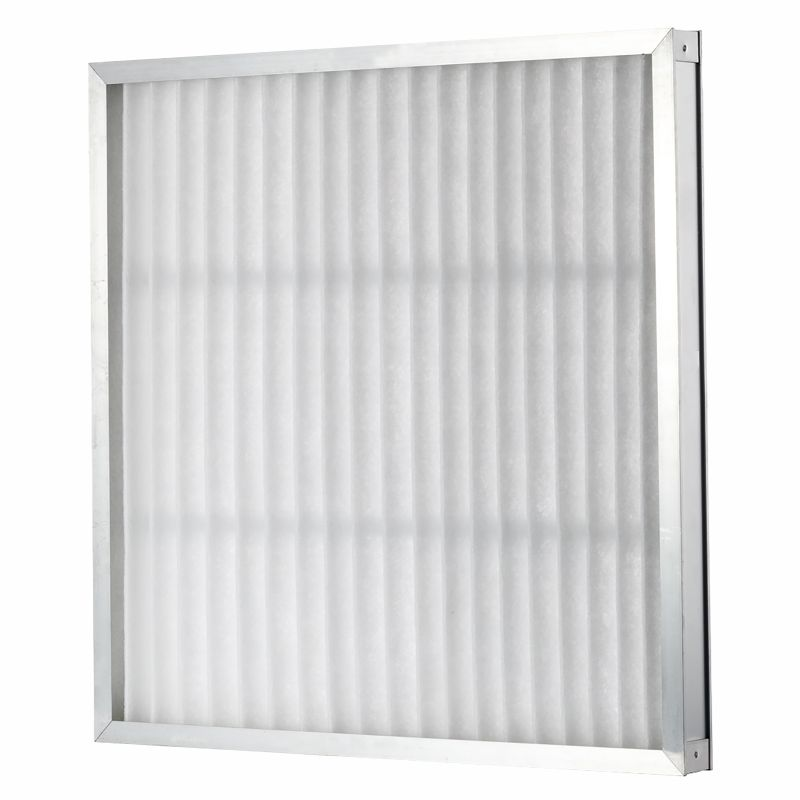
Panel Filters
Panel filters are the workhorse of many HVAC systems. Constructed with pleated or flat media in rigid frames, they protect downstream equipment and improve indoor air quality by capturing coarse dust and airborne fibers. They are available in a range of efficiencies (often specified by MERV or EN779/ISO16890 equivalents) and are commonly used as first-stage filters in multi-stage systems. Their low upfront cost and easy replacement make them suited to general building ventilation, commercial HVAC and industrial intake protection.
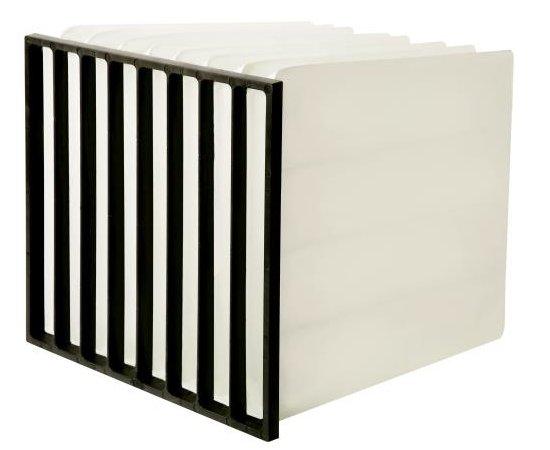
Pocket (Bag) Filters
Pocket filters (also called bag filters) use multiple fabric pockets to create a large surface area inside a compact frame. This high surface area produces a high dust-holding capacity and lower pressure rise over the life of the filter compared with shallow panel designs. Pocket filters are typically used as secondary filters in HVAC systems, as pre-filters to HEPA stages in cleanrooms, and in industrial applications where space efficiency and extended service life are important. Their robust performance under variable dust load makes them a popular choice across manufacturing, commercial buildings and data halls.
Compact Filters
Compact filters bridge the gap between pocket filters and HEPA pre-filters. They come in thicker pleat packs and deeper frames (common depths are 292 mm and 400 mm) and are engineered to handle both coarse and fine dust as a dependable pre-stage for final filtration. Compact filters are frequently used in central ventilation plants, gas turbine intakes, and wherever higher dust loads are expected. They can be supplied with reinforced pleat packs and special media constructions for demanding applications.
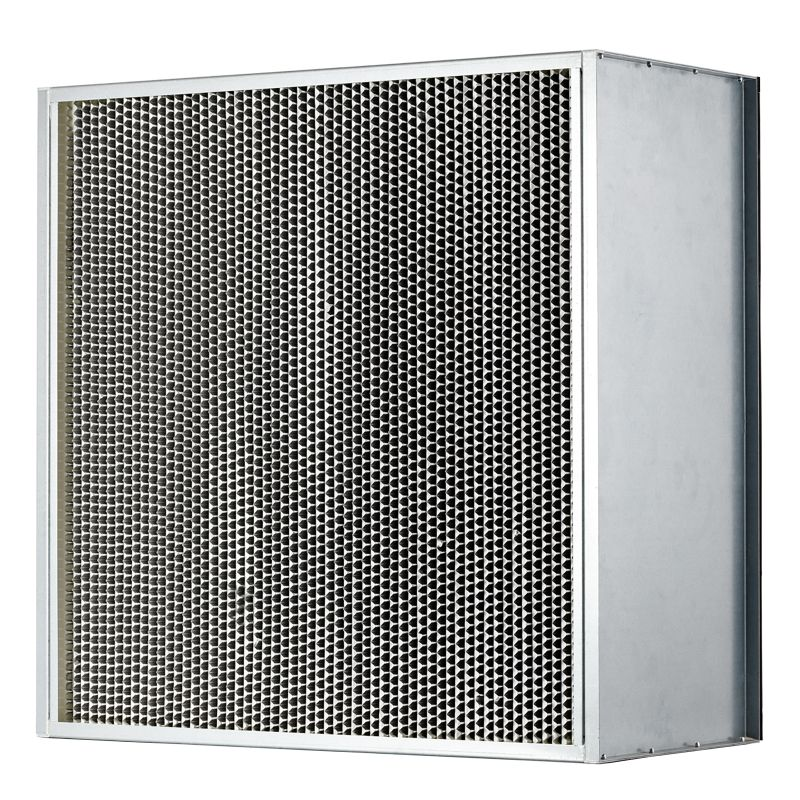
HEPA & EPA Filters
HEPA (High Efficiency Particulate Air) and EPA filters are used wherever particle removal at the sub-micron level is required — pharmaceutical cleanrooms, hospitals, microelectronics, food and beverage production and similar sensitive environments. HEPA filters are typically tested and certified to capture 99.97% of particles at 0.3 microns (or as specified by local standards) and are manufactured with rigid frames, sealed pleat packs and gasketing materials that ensure minimal bypass or leakage. HEPA technology is essential for airborne contamination control and for meeting regulatory cleanroom classifications.
Activated Carbon & Gas-Phase Filters
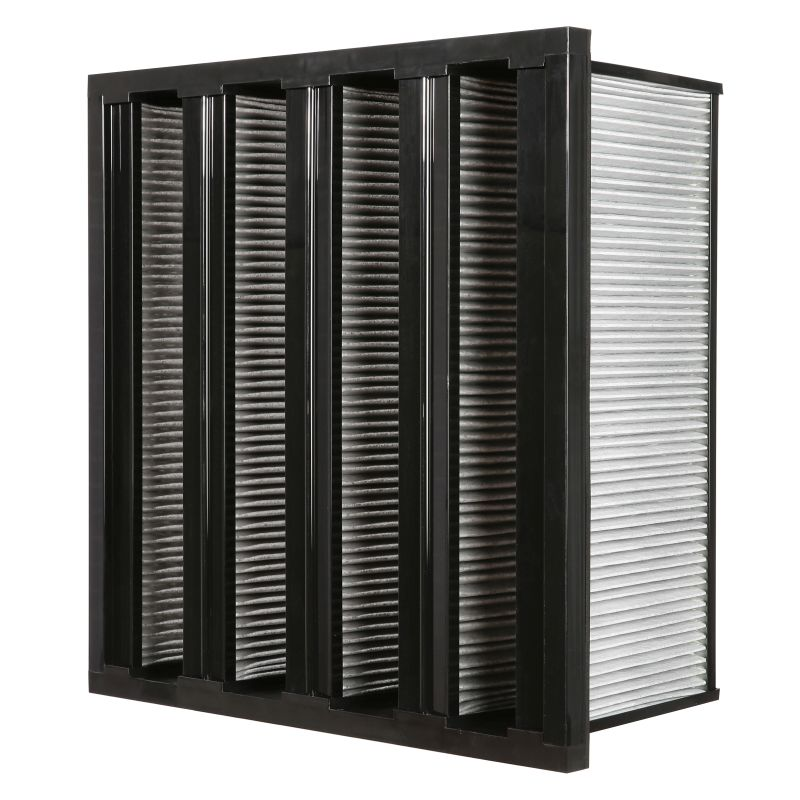
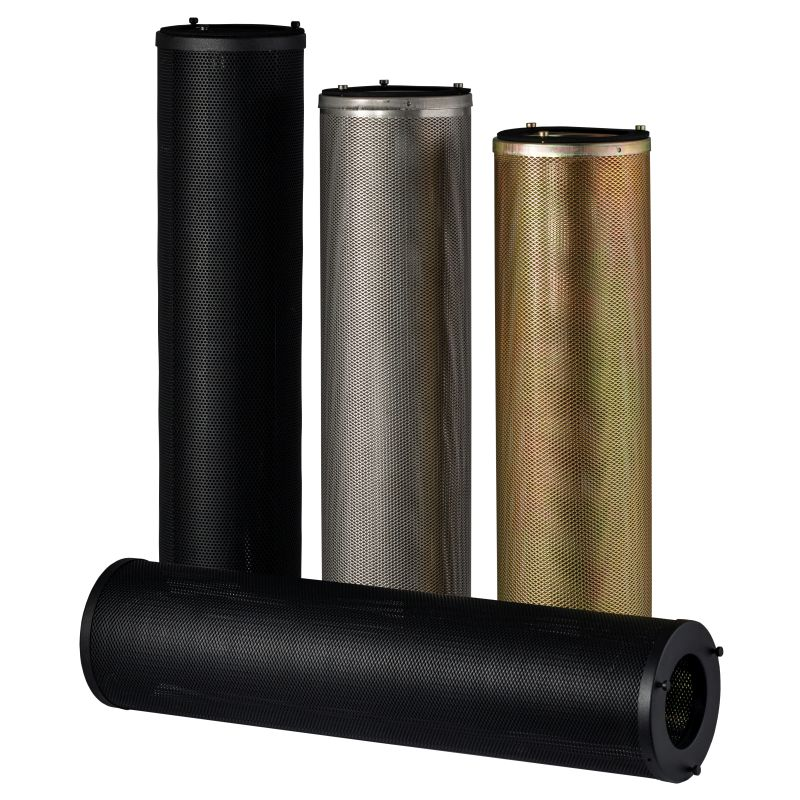
Activated carbon filters work by adsorption — trapping gases, odors and VOCs on a high-surface-area carbon substrate. These filters are commonly installed downstream of particulate pre-filters and are widely used in airports, hotels, laboratories, industrial process ventilation and any application where odour control and gas-phase contaminant removal are required. Carbon modules can be configured as panels, bags or V-bank cartridges and are selected according to the target contaminants, concentration and airflow.
High-Temperature Filters
High-temperature filters are designed for applications where the air stream exceeds temperatures permissible for standard filter media. Typical applications include kiln exhausts, industrial ovens, heat-recovery systems and flue gas filtration. These filters use specialized media and frames that maintain structural integrity and filtration efficiency at elevated temperatures.
Paint Collectors & Paint Booth Filtration
Paint booths and spray lines pose unique filtration challenges: they must capture paint overspray, minimize risk of fire and support efficient airflow for consistent finish quality. Paint collectors and multilayer filter trains (pre-filters, intermediate arrestors, final pocket/compact stages) are engineered to trap paint particles while allowing stable booth airflow and enabling safe, efficient filter change-outs.
Accessories & System Components
Flexible Engineering also supplies complementary accessories such as mounting frames, gasketing, seals, filter housings, differential pressure gauges and monitoring systems. These components make it straightforward to install filters with proper air sealing and to monitor performance for planned maintenance and energy optimization.
SELECTION GUIDANCE — CHOOSING THE RIGHT FILTER
Selecting the correct filter begins with understanding the contamination to be controlled (dust size distribution, VOCs, paint overspray, oil mist), the required cleanliness level, the allowable pressure drop and the desired service interval. For many installations a staged approach is best: coarse pre-filters (panel) to remove large debris, pocket/compact secondary filters for dust-holding capacity, and HEPA/activated carbon modules for final particulate and gas-phase control. Consideration must also be given to fire safety, humidity and operating temperature.
MAINTENANCE & LIFECYCLE COST
Lifecycle cost is driven by initial price, energy consumption (fan power to overcome filter pressure drop), filter change frequency and disposal costs. Properly sizing pre-filters saves energy and prolongs the life of final filters. Monitoring differential pressure across filter stages is a low-cost step that helps schedule replacements before efficiency loss or excessive fan energy penalties occur.
QUALITY, STANDARDS & CERTIFICATIONS
Products used in critical applications must meet recognized standards. HEPA and EPA filters are commonly tested to EN1822 or equivalent national standards. Manufacturers often provide ISO certifications and product testing reports. Choosing suppliers with test credentials and a documented quality system reduces the risk of underperformance and helps meet compliance requirements for cleanrooms and regulated industries.
APPLICATIONS & INDUSTRY USE-CASES
Flexible Engineering’s filters are suitable for a wide array of industries: HVAC and commercial buildings, cleanrooms and pharmaceuticals, food and beverage, chemical and petrochemical plants, paint finishing and automotive manufacturing, data centers and power generation. Tailored filter trains and engineered modules ensure that each application gets the optimal combination of efficiency, long life and acceptable pressure drop.
WHY CHOOSE FLEXIBLE ENGINEERING
Flexible Engineering combines local market knowledge with proven filter technologies. The company’s product range is engineered to be adaptable — from off-the-shelf panel filters to bespoke activated carbon modules — permitting a cost-effective approach to air quality challenges. Flexible Engineering works with trusted global manufacturers and applies best-practice filtration engineering to deliver solutions that prioritize air cleanliness, energy efficiency and long-term value.
INSTALLATION & AFTER-SALES SUPPORT
Correct installation — with leak-proof frames and proper sealing — is as important as filter media selection. Flexible Engineering provides technical support during system design, assists with selection calculations (pressure drop, face velocity, and service interval) and offers after-sales maintenance programs so clients receive sustained performance and predictable operating costs.
SUSTAINABILITY & ENVIRONMENTAL RESPONSIBILITY
Choosing efficient filters and optimizing replacement schedules reduces fan energy use and lowers operational carbon emissions. Many modern filter media have improved dust-holding capacity which saves material over time. Flexible Engineering’s focus on energy-aware ventilation solutions aligns with the company tagline, ‘For a Green Tomorrow.’
Contact Flexible Engineering to discuss your filtration needs. Whether you require standard HVAC filters or a fully-engineered multi-stage filtration system for industrial processing, Flexible Engineering provides product selection expertise, installation support and ongoing maintenance services to protect people, processes and equipment.
Interested in This Solution?
Our engineering team provides free, no-obligation consultations to specify the right system for your plant.
Request Free Consultation